It is with great pleasure that we share with our readers this article prepared by the Brotéria’s technical team for our getLISBON invites series. Through it, we come to know this house open to the city, which many remember as the Hemeroteca Municipal (periodicals library), and which today brings together in the same space: thought, culture and spirituality.
In Bairro Alto, among streets shaped by centuries of history and lived experience, there is a place where thought, culture and spirituality meet in a discreet yet profound way. Brotéria is today a house open to the city, but its story began long before it occupied the Palace of the Counts of Tomar.
With more than 120 years of history, Brotéria is not merely a magazine or a cultural centre: it is a project that spans different eras, accompanying the transformations of society while affirming itself as a space for reflection and dialogue.
From Scientific Magazine to Cultural Reference
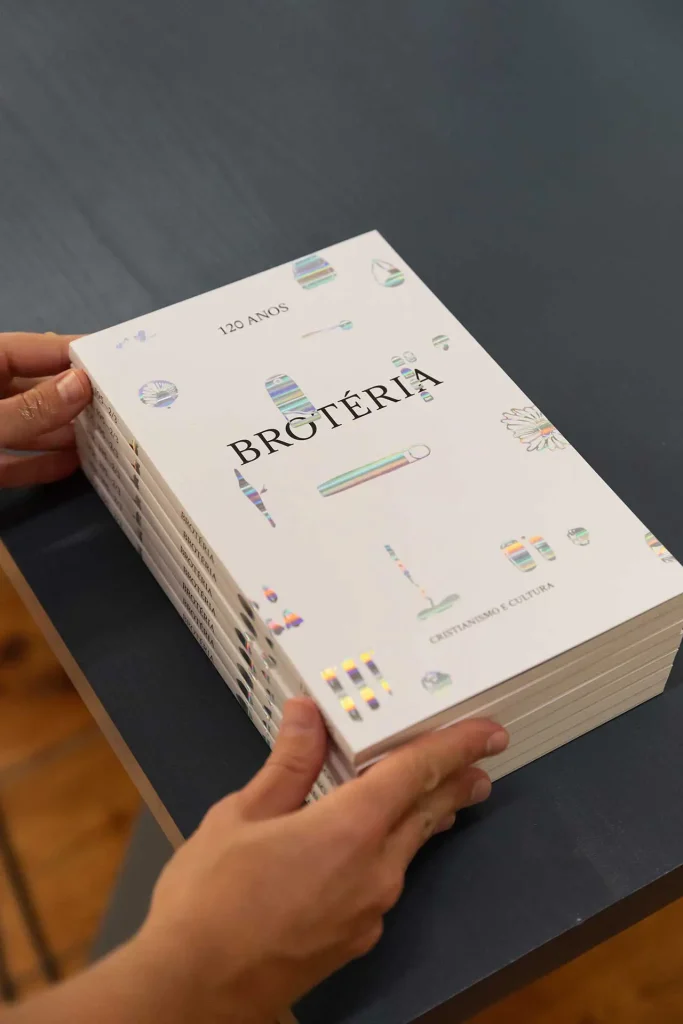
Brotéria was founded in 1902 by three Jesuit professors at the College of São Fiel, in Louriçal do Campo: Joaquim da Silva Tavares, Cândido de Azevedo Mendes and Carlos Zimmermann. Initially titled Brotéria – Revista de Sciencias Naturaes, its main aim was to disseminate and develop scientific research carried out within the Society of Jesus. This was not merely an academic endeavour. At a time when the Church was often criticised by positivist thought, the Jesuits sought to demonstrate that science and faith could coexist. For these Jesuit priests, studying nature was also a way of understanding the divine.
For decades, the magazine’s scientific section stood out in research, publishing hundreds of articles and contributing to the identification of new species. Its recognition extended beyond national borders, becoming part of international networks of scientific dissemination. Throughout the 20th century, the magazine published a significant number of scientific works. Between 1902 and 2002, more than a thousand articles were issued, particularly in fields such as botany, zoology, biochemistry and genetics. During this period, hundreds of new species were described, contributing to scientific progress in Portugal and to the international recognition of its authors.
At the same time, between 1907 and 1924, a series dedicated to scientific outreach emerged, written in Portuguese and aimed at a broader audience. This initiative also had a practical function: to ensure the financial sustainability of the more specialised publications.
But Brotéria did not remain confined to the laboratory.
In 1925, a new phase began with the creation of Brotéria Cultural. From then on, the magazine expanded its scope to the humanities — literature, philosophy, history and theology — becoming a privileged space for critical thought in Portugal. In this context, literary criticism assumed particular importance throughout the 20th century. Many of these texts went beyond analysing works: they helped shape readers, introduce authors and stimulate cultural debate at a national level. Key figures in Portuguese literature appeared in the pages of Brotéria, in a dialogue that marked generations. Writers such as Vergílio Ferreira, Sophia de Mello Breyner Andresen and Alves Redol maintained close ties with the magazine.
A New Life in Bairro Alto
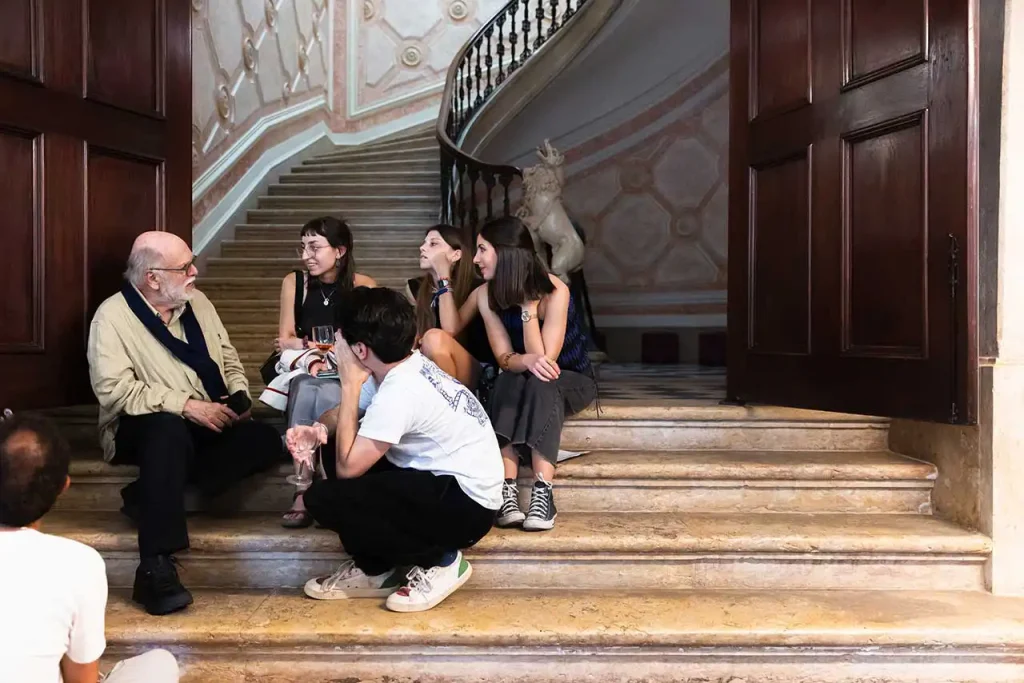
In 2020, Brotéria gained a new dimension when it settled in Bairro Alto, becoming part of the multicultural project developed by Santa Casa da Misericórdia de Lisboa in this area of the city. The magazine remains, but is now accompanied by a cultural centre that extends its mission.
Here, written reflection coexists with exhibitions, debates, encounters and informal moments. The programme emerges from dialogue with the city and seeks to respond to present-day questions, without losing the depth that has characterised the project since its origins.
More than an institutional space, Brotéria – Cultural and Scientific Association presents itself as a house. A house with several entrances: the magazine, the library, the gallery, the bookshop and the café. Different ways of arriving at the same place — the meeting point between thought and experience — where faith and contemporary urban cultures can enter into dialogue.
The Palace of the Counts of Tomar
The building that now houses Brotéria is, in itself, a testimony to the history of Lisbon.
Located in an area that, until the 16th century, was occupied by olive groves belonging to the Convent of Trindade, the palace has undergone transformations over the centuries. It has had different owners and uses — commercial space, ecclesiastical court, residence, headquarters of the Royal British Club and the Hemeroteca Municipal (periodicals library) — reflecting the changes of the city. After the 1755 earthquake, it suffered significant damage and was subsequently rebuilt and adapted. In the 19th century, it acquired the name by which it is known today, associated with the family of the Counts of Tomar. Later, in 2012, the building became part of the heritage of Santa Casa da Misericórdia de Lisboa, which promoted a careful process of rehabilitation and restoration, returning it to the city with a new cultural purpose.
A Journey Through Art, History and Thought
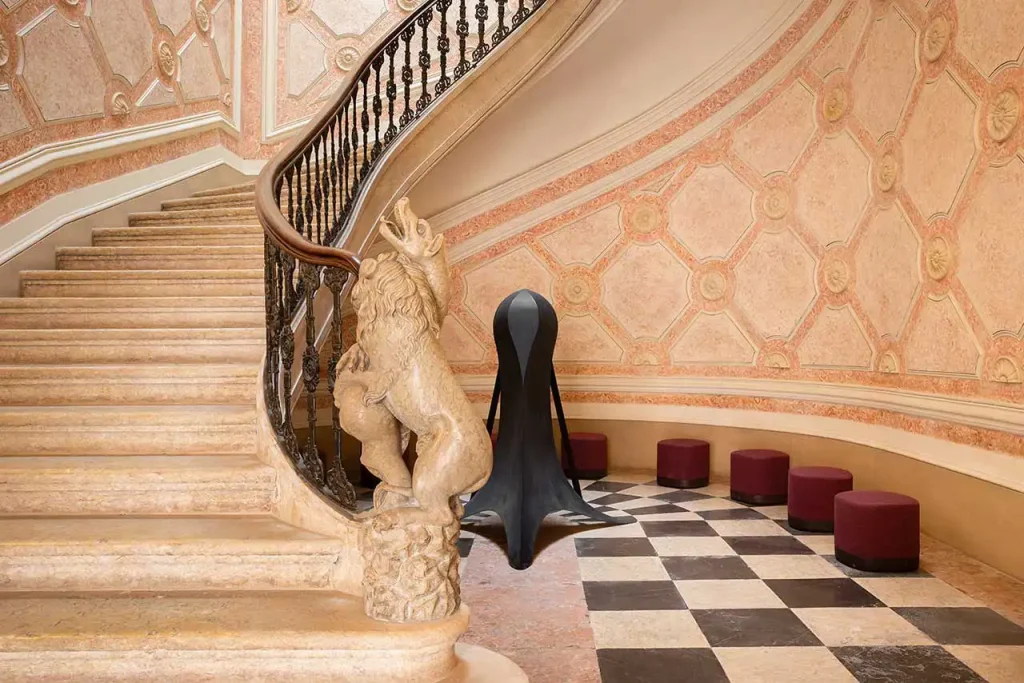
Entering Brotéria today marks the beginning of a journey in which architecture, memory and reflection continuously intersect. Right at the entrance, green doors open onto a grand marble staircase that structures the visitor’s experience. Sculptural and decorative elements evoke symbolic themes — such as the struggle between good and evil — while ceilings and walls reveal detailed ornamentation, with medallions and motifs that refer, among other things, to the seasons of the year.
This first contact sets the tone: a space where every element carries meaning and where different historical layers coexist.
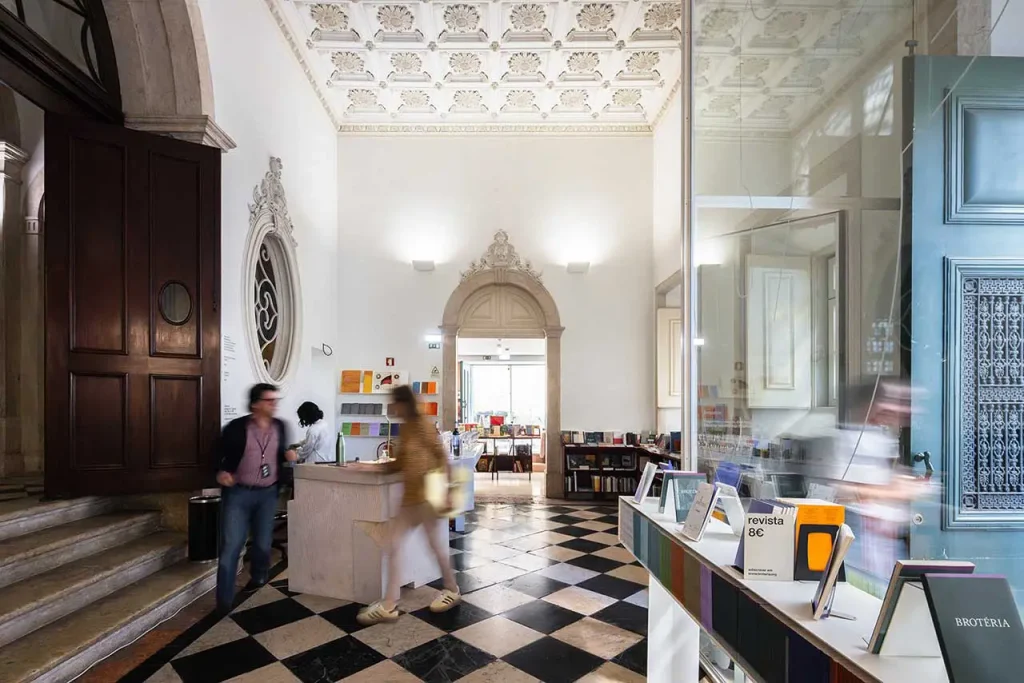
The passage naturally continues through the SNOB bookshop, conceived as a place of transition and discovery. Here, contemporary editions coexist with second-hand books, extending the tradition of the circulation of ideas. Nearby, the gallery asserts itself as a space for artistic experimentation, proposing an open dialogue between contemporary art, spirituality and social issues. Its programme favours diverse approaches, encouraging new ways of seeing and interpreting the world. The house’s permanent art collection, composed mainly of Portuguese artists, reinforces this dimension. More than an exhibition set, it is an invitation to contemplation and questioning, as the works — distributed throughout the various spaces — encourage moments of pause and attention, contributing to an experience that is both aesthetic and reflective, rooted in both place and moment.
Rooms with Memory
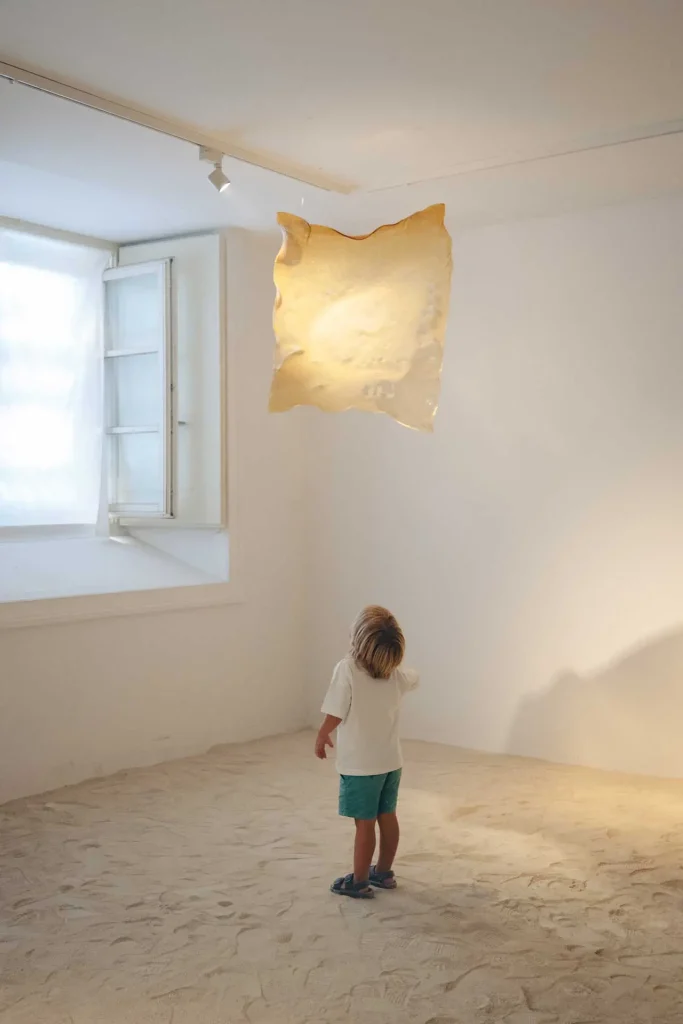
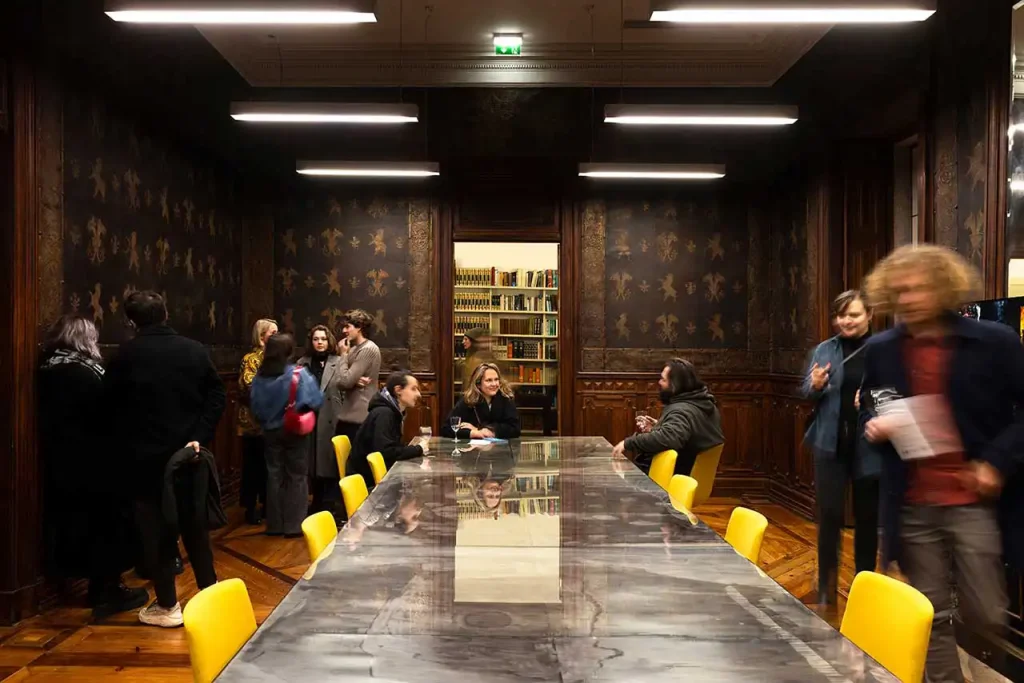
On the upper floor, the journey continues through rooms that preserve the identity of the former palace. The decorated ceilings, with scenes and symbolic elements, reveal Romantic influences typical of the 19th century and suggest interests linked to trade, industry and navigation — reflecting the historical context of the former owners. Today, these rooms are open to the public, functioning as spaces for work, encounter and lingering. Each holds its own narrative.
The Brotéria–Genética Room evokes the scientific contribution of the magazine, paying tribute to the Jesuit priest Luís Archer and the introduction of molecular genetics in Portugal. The artwork present in the room explores the relationship with light, a central element in its interpretation.
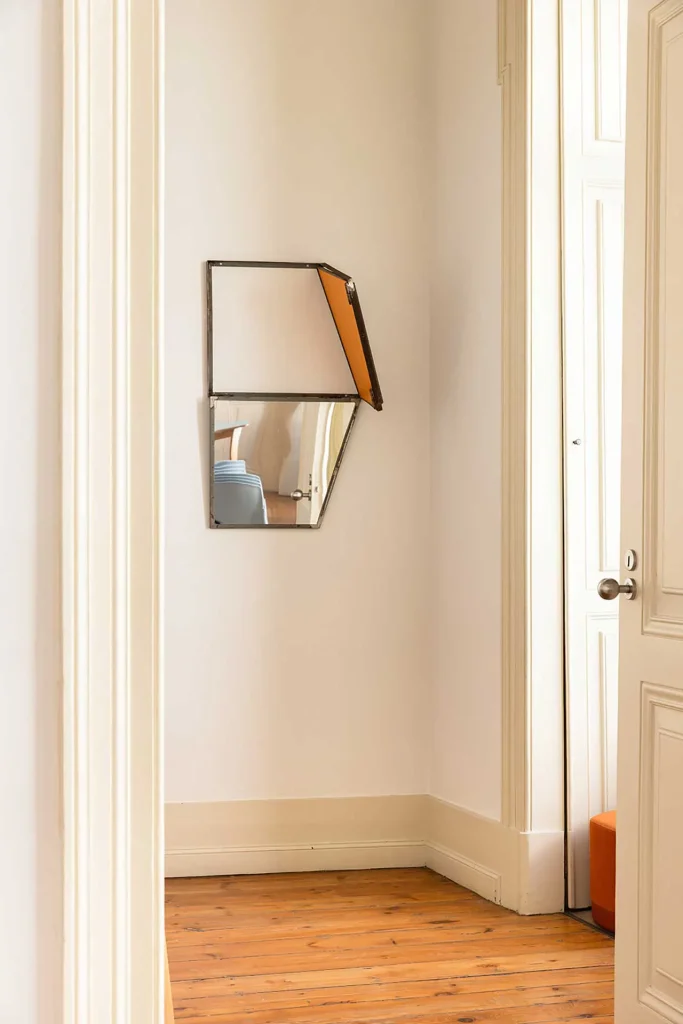
The Aula da Esfera Room refers to the Jesuit scientific tradition, drawing inspiration from one of the most important centres of scientific teaching in Portugal between the 16th and 18th centuries. Its decoration incorporates symbolic elements associated with economic and social activity, underlining the connection between knowledge and the practical world.
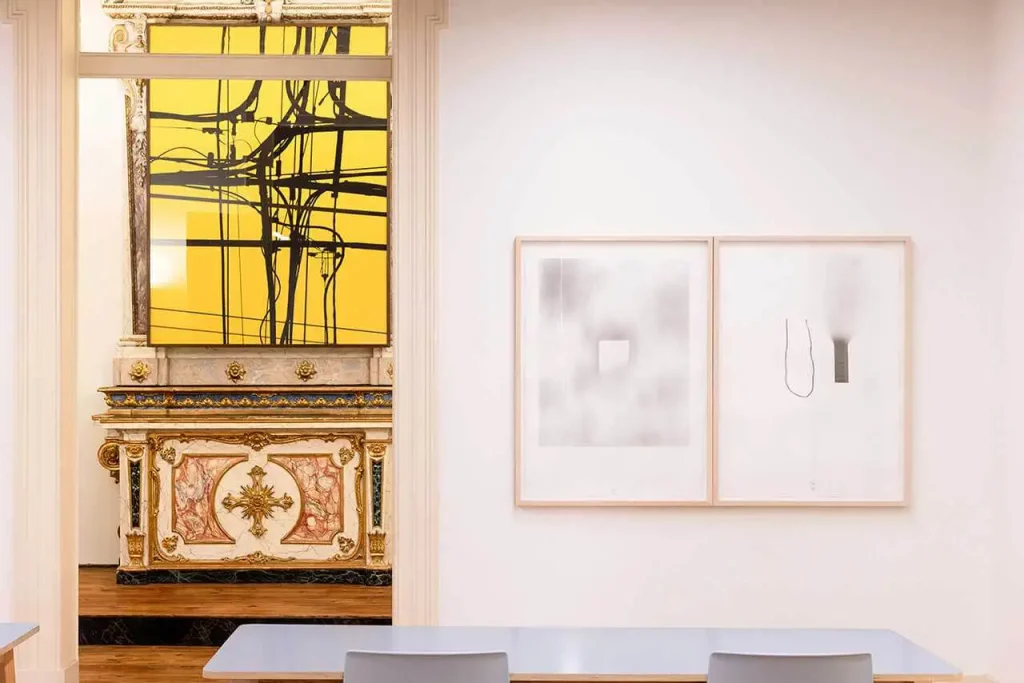
The Homem Espuma Room, inspired by the thought of Fr Manuel Antunes SJ, proposes a reflection on the contemporary human condition. Formerly a music room, the space still preserves decorative references to that use, including representations of musical instruments. From here, one can access a small oratory, where stained glass and liturgical symbolism engage in dialogue with contemporary art, bringing together spiritual tradition and present-day expression.
The Casa de Escritores Room refers to the Jesuit tradition of religious communities dedicated to intellectual production. The space is decorated using ancient techniques of embossed and painted leather (guadameci), a rare example of this craft still existing in Portugal. Among the decorative elements is the coat of arms of the Costa Cabral family, who lived here until the establishment of the Republic in 1910.
The Pátio das Cecídias
At the centre of the building, the courtyard introduces a more informal dimension to the experience. Built over a cistern — one of the oldest elements of the palace — it maintains a discreet connection to the past while opening itself to the present.
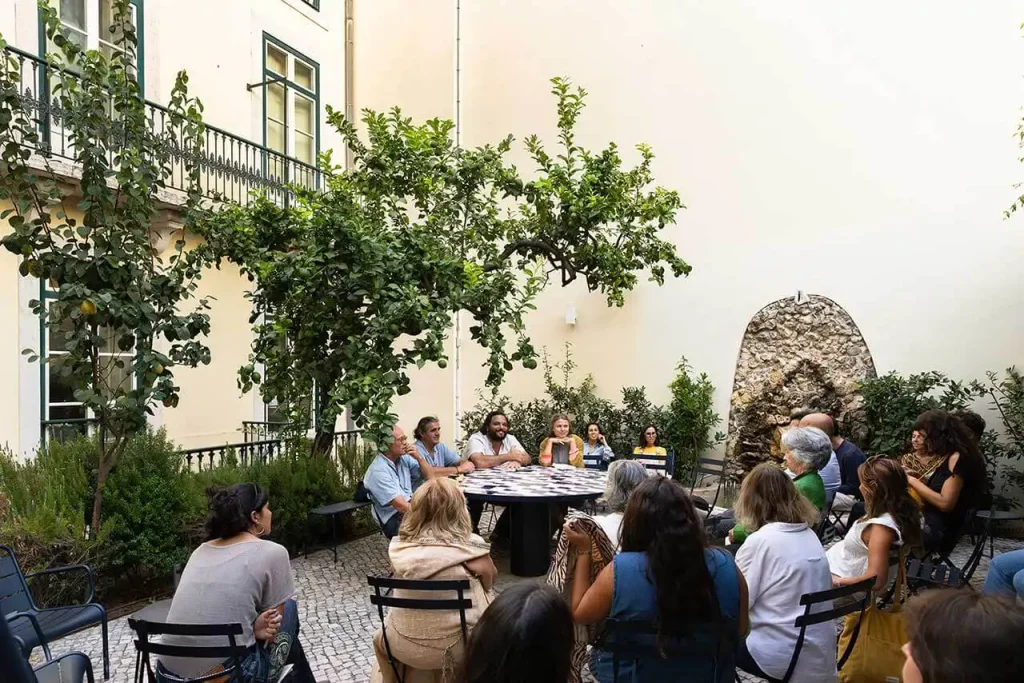
Today, it is a place for staying and meeting. This is where the Clara Café is located, conceived to accompany the rhythm of the day — from breakfast to long afternoon pauses. Its approach values seasonality and the origin of its products, offering a contemporary, mindful and comfortable experience.
Library: Living Memory
Brotéria’s library constitutes one of the most significant cores of this project. With an extensive collection of books and journals accumulated over decades of its history, it specialises in areas such as the history of the Society of Jesus, philosophy, theology, literature, art and politics. For a long time reserved for the Jesuit community, it has gradually opened up and is now accessible to the public for on-site reading and research. More than an archive, it is a living place of knowledge, constantly growing. Recently, it was distinguished for its work in preserving and restoring its heritage — receiving the Gulbenkian Heritage Award Maria Tereza and Vasco Vilalva 2024 — further reinforcing Brotéria’s role as an important cultural and intellectual centre in the city.
A House for Lisbon
More than a physical space, Brotéria is today a place of encounter. Between past and present, between science and culture, between faith and contemporary thought.
In Bairro Alto, an area marked by the intensity of urban life, this house offers something different: time to think, space for dialogue and freedom to explore.
And perhaps that is what makes it truly unique in Lisbon.
| Never miss another article | Subscribe here |

Brotéria is a cultural centre founded by Portuguese Jesuits in Bairro Alto, open to engagement with the city. It explores contemporary urban concerns from multiple perspectives and through diverse forms of expression, in a rigorous and in-depth manner: through conversations, exhibitions, articles, performances, seminars and workshops. It generates and hosts artistic, research-based, discursive, communicative and spiritual programming.